'Hygge' in the highlands
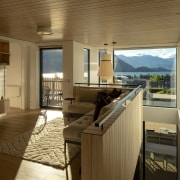
Reflecting hygge (a Danish concept representing a cosy, contented mood), this sustainable family home for a New Zealand/Danish family features blonded timbers, warm textures and locked-in thermal performance


Designed by Eliska Lewis, Eliska Lewis Architects
From the architects:
Owner brief and design response
For this young New Zealand-Danish family the house will be a retreat for large family gatherings during the next couple years while they are working overseas, with an aim to one day occupy the home as their full time residence.
Danish design principles featured in the brief for a functionalist style that emphasises simplicity, elegance, and energy efficiency.
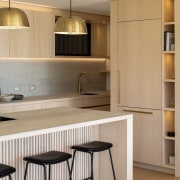
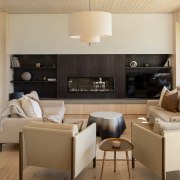
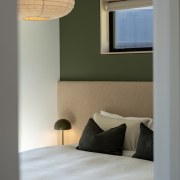
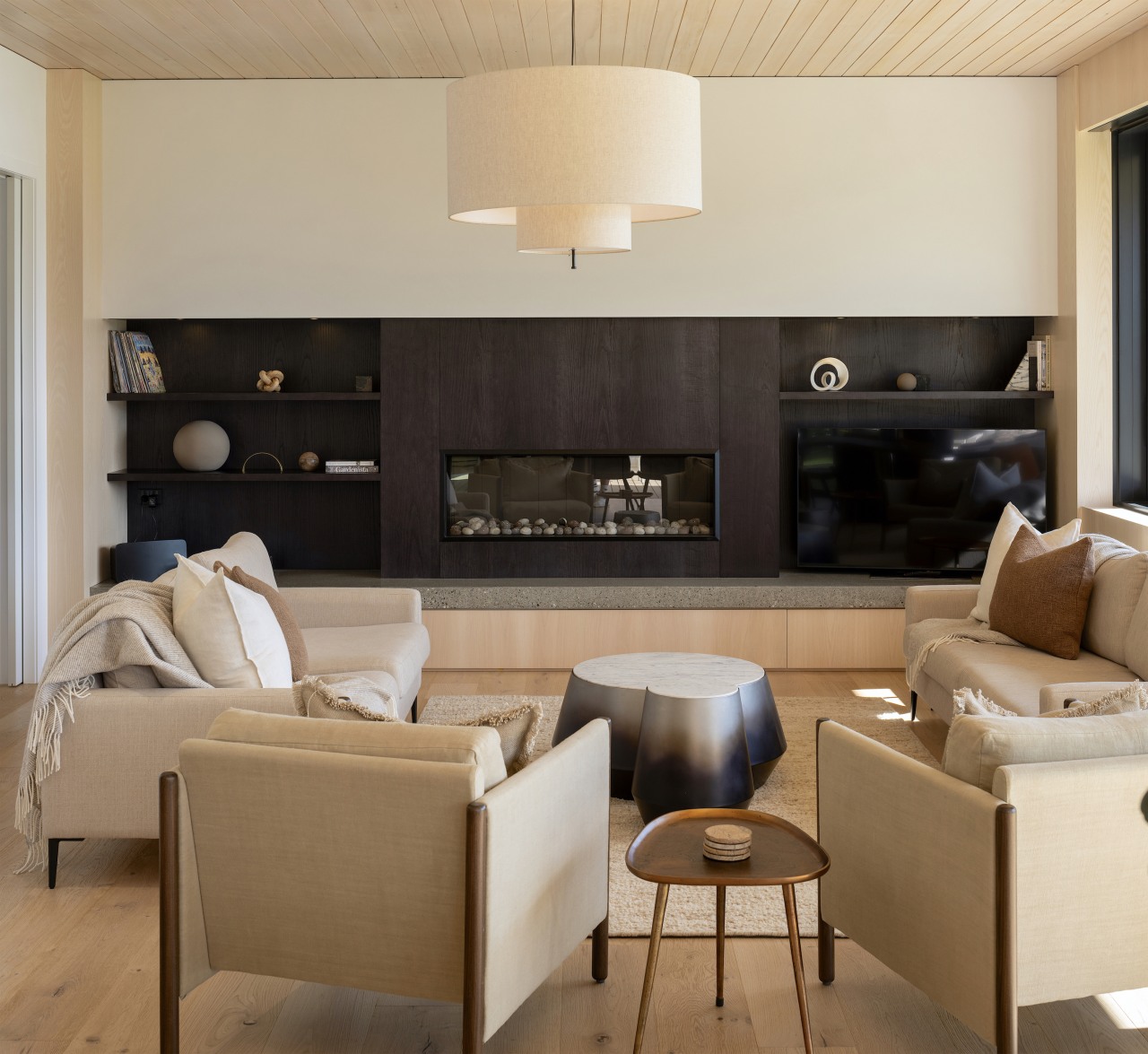
Danish design is also known for its clean lines, use of natural light, natural materials, and the notion of “hygge” (cosiness) with rooms that have a warm and textured feel.
The owners requested a floor plan that was consolidated in footprint and would be able to entertain and sleep 12 people.
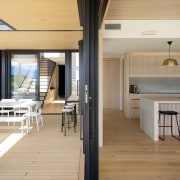
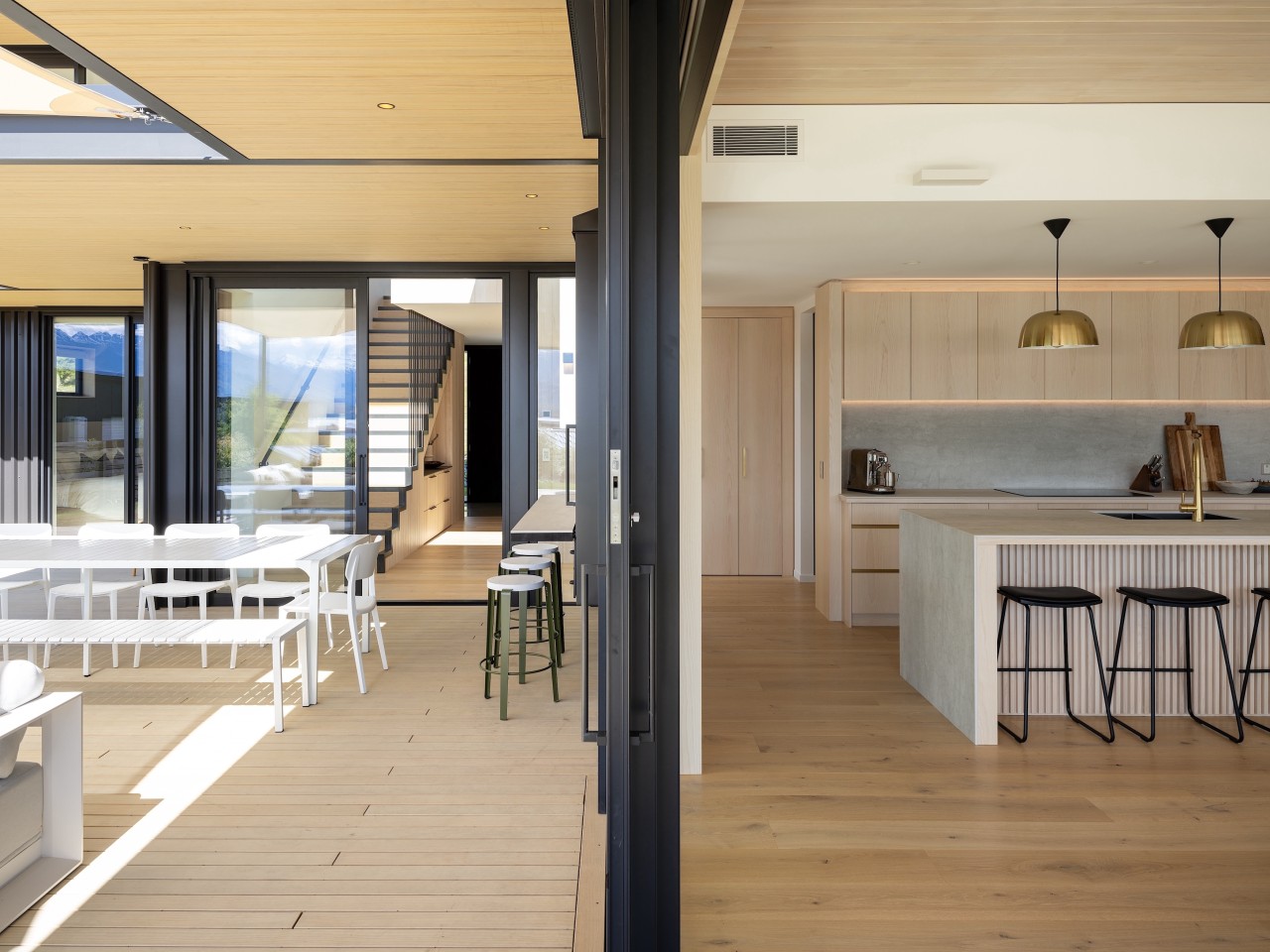
In response to this, sliding doors make larger areas connected yet can transform into smaller private areas.
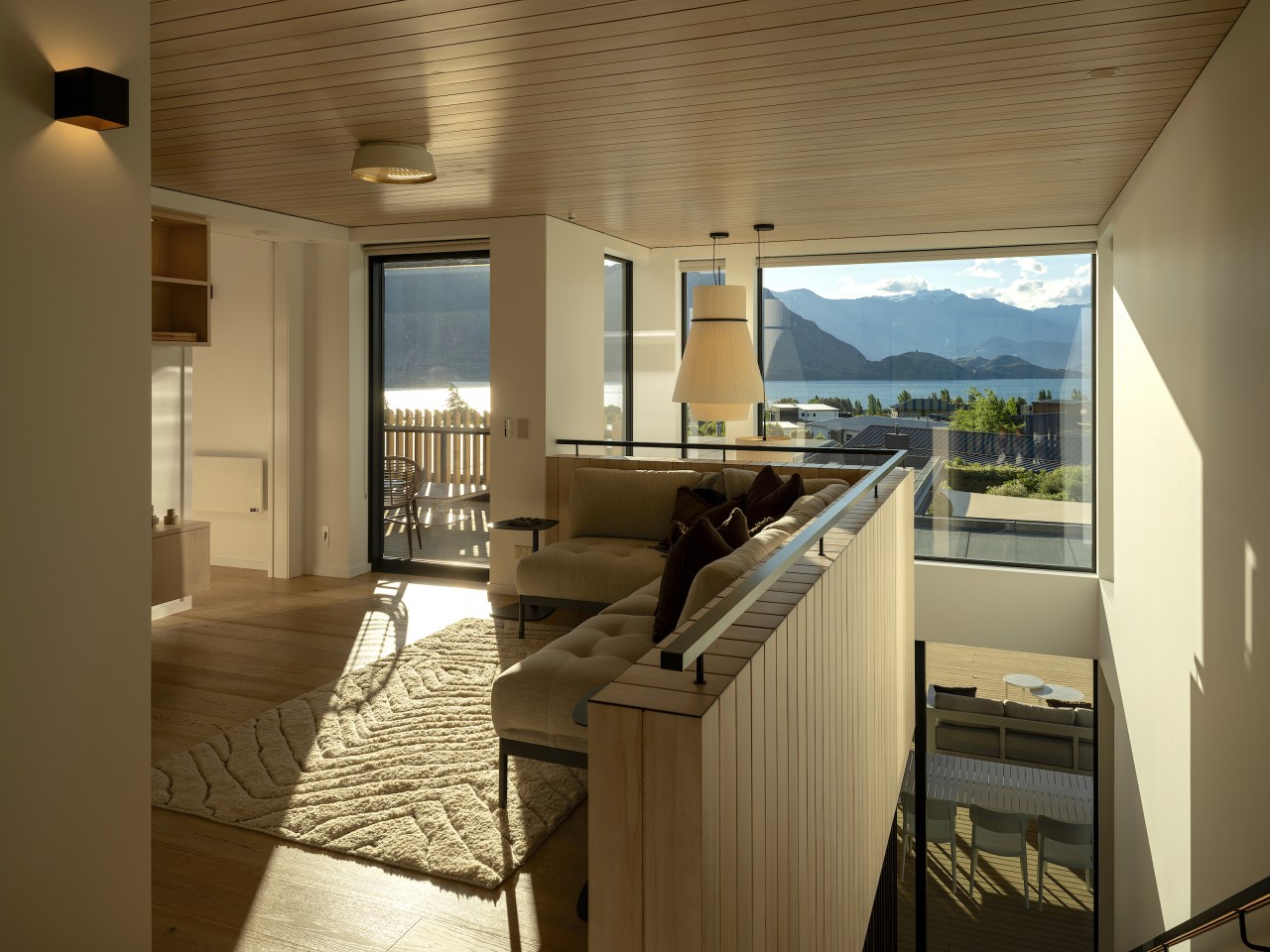
Plus, circulation spaces double as other functions such as a second lounge.
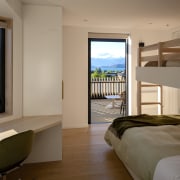
The bunk rooms can be combined as one large room or be split into two rooms, and open out onto a rooftop deck.
They also feature pop out nooks, providing desk space and re-orienting the exterior wall to better access the lake views.
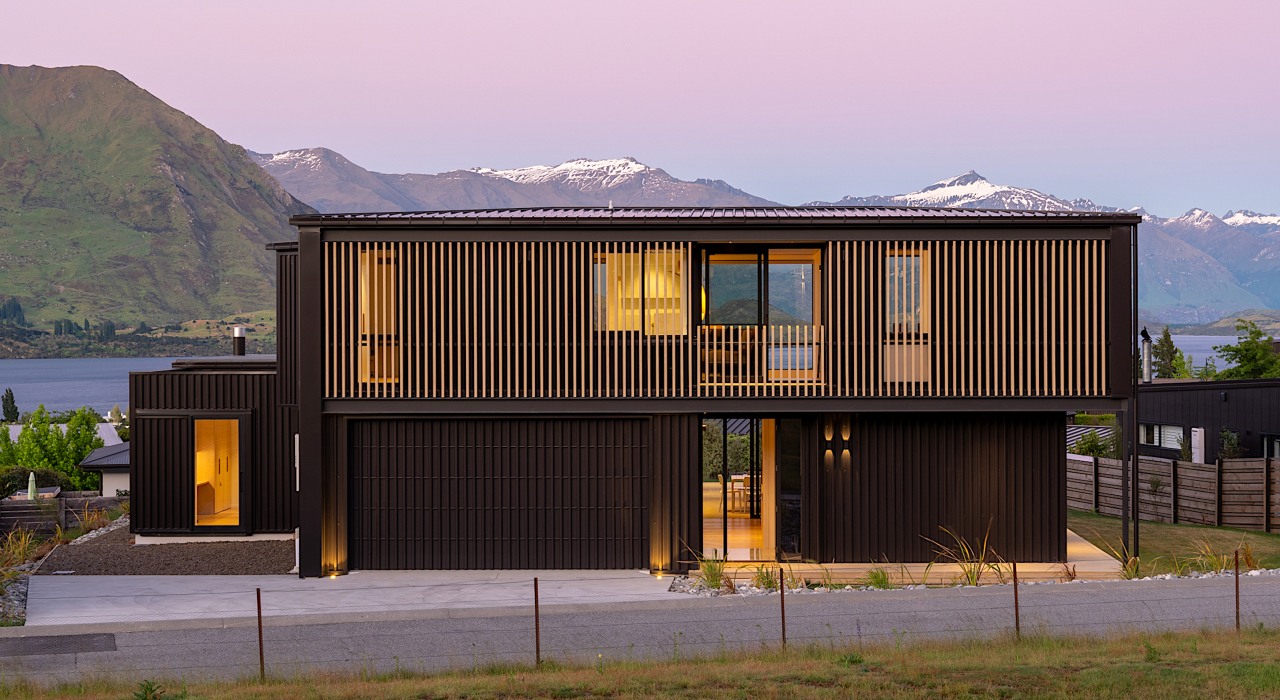
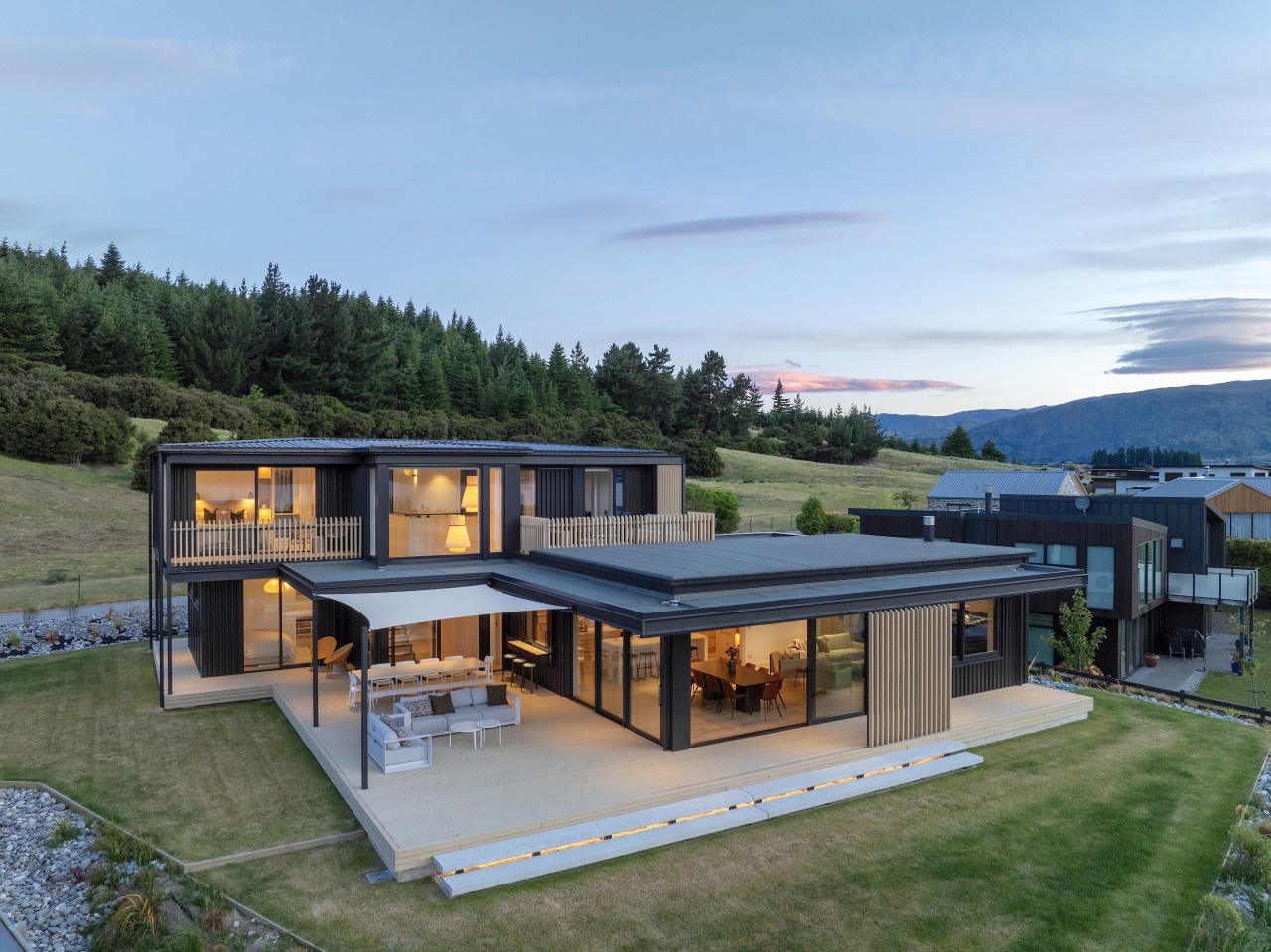
Vertical timber slats enliven the house with plays on privacy, light and shadows, at various angles at different times of day.
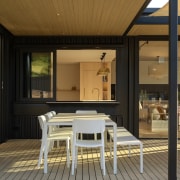
A pallet of blonded timbers lightens the interior in keeping with the owners' brief, and continue out to deep verandah overhangs and decks.
Pops of colour contrast with the use of darker timber accents, metallic gold finishes, and greens in tile work and textiles.
Sliding screens and movable sails provide shelter while letting light through and can be adjusted for the changing seasons.
Construction methods were implemented for thermal performance, and materials have been selected for durability and natural beauty – they come together in a showcase of craftsmanship building.
Project site and context
The 998m² site has a suburban context and currently borders forested land to the East that one day could change to housing.
Mountain views are all around, with expansive lake view potentials from a second storey.
Access to the site is from the East with topography gently sloping to the West.
A challenge for the project was finding a way to have visual access to the lake and mountain views while maintaining privacy from neighbours.
This desire for both shadow (umbra) and light (lux) at same time, gave rise to the concept of using screens that have a depth to their dimension, so that when viewed side on the screen wall will look solid to the passerby, but when viewed straight on are see through.
Material selection, method of construction
Walls were comprised of pre-fabricated LVL timber framing with a second layer 45mm service cavity to add insulation and to cover thermal bridges.
To further address thermal bridging, the steelwork skeleton was designed in most places to be exposed and on the exterior of the house rather than within the wall frame, and in turn became an architectural feature of the project and a connection point for the various privacy and shading screens.
Walls were clad in colour steel for durability and low maintenance.
Glazing is high spec double Low-E to reduce heat loss and solar gain, fitted into thermally broken frames.
The first floor level roof is pre-fabricated truss construction with double layers Batts insulation and colour steel cladding, while the ground floor roofs have a membraned warm roof system.
Interior joinery was carefully thought out to form service cavity and pathways for the heat recovery ventilation system to keep walls and ceiling insulation uninterrupted.
Interior floors are a combination of oak flooring and polished concrete on a raft slab system.
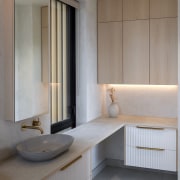
Bathrooms walls are textured with Luna plaster render that blend seamless into porcelain slabs.
Abodo timbers were used for exterior screens, decks, balustrades, and soffit linings that flow through to the interior with Low VOC coated blonded timbers, American White Ash panels and Ashin T&G planks employed for wall and ceiling linings and joinery.
The combination of elements fit the homeowners' brief for warmth and texture.
Credit list
Architect
Kitchen designer
Landscape
Roof
Window/door joinery
Rugs
Wall coverings
General heating
Feature lighting
Living area furniture
Other
Photographer
Builder
Kitchen manufacturer
Soft furnishings
Cladding
Louvre system
Bathroom tiles
Paint, exterior and interior
Fireplace
Control systems
Dining table/chairs
Awards
Helpful links
Expert Property Advice
Windows and Doors
Cabinetry Hardware
Spas
Roofing
Flooring
Home Design
Story by: Trendsideas

Home kitchen bathroom commercial design