Continuity meets subtle separation
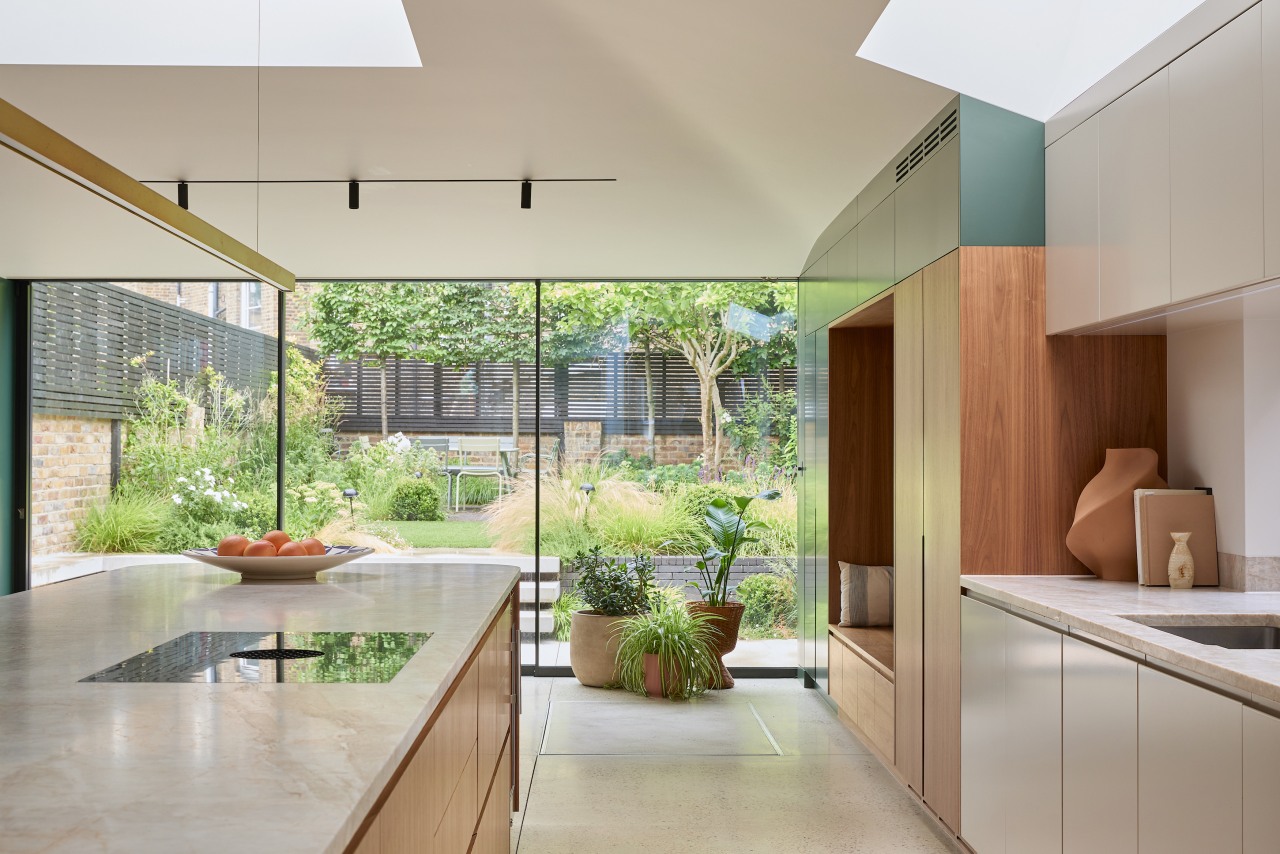
A generous, long kitchen-dining space – quietly dramatic in scale – has its proportions enhanced by richly detailed walnut joinery, fluted cabinetry, and strong blocks of colour


Designed by Paul Archer Design
From the designer
Design rationale
This full-house interior refit reimagines a family home through considered rich materiality and a high-quality finish.
Working within the constraints of an existing rear extension, the project presented an opportunity to explore a new architectural approach, one that embraced the long, linear layout while creating zones.
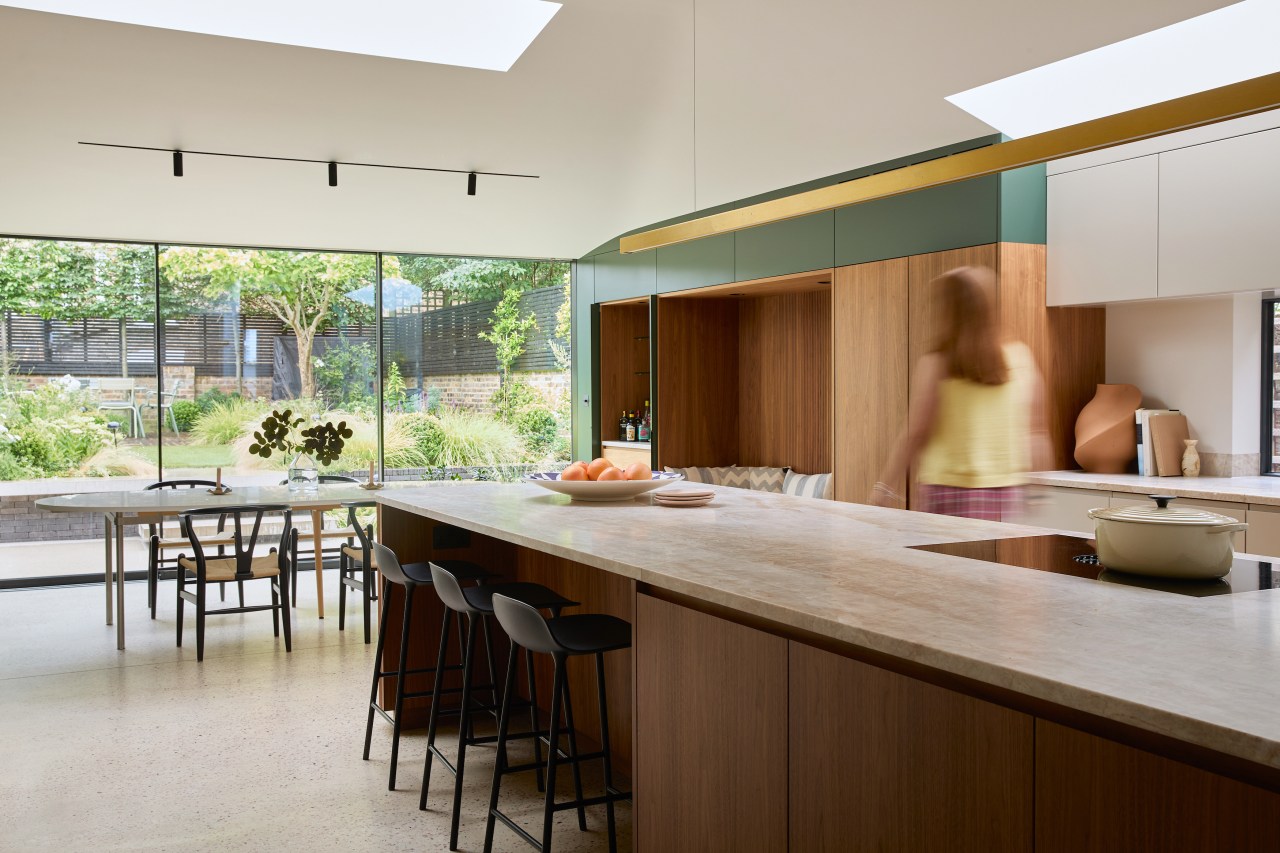
The heart of the home is a generous, long kitchen-dining space, open in volume and quietly dramatic in scale.
Its proportions are enhanced by richly detailed walnut joinery, fluted cabinetry, and confident blocks of colour.
Rather than fragmenting the space, the design relies on material continuity and clean lines to create a cohesive, flowing environment that supports both family life and informal gatherings.
The palette is tactile and contemporary, with an emphasis on natural finishes that elevate the everyday.
The existing rear extension posed design challenges due to its depth and scale, but these were resolved by allowing the architecture and interiors to work in tandem.
Polished concrete flooring with exposed aggregate runs throughout the ground level, reflecting light and grounding the space with a durable, elegant surface.
Floating steps lead directly from the living space into a newly designed garden by Lucy Wilcox, reinforcing the connection between inside and out.
Former back rooms, once disconnected from the life of the house, have been transformed into adaptable spaces for study, work, and wellbeing – including a dedicated yoga room and home office, supporting flexible patterns of use.
Bathrooms were approached with restraint and precision, featuring minimal detailing and clean geometry for an uncluttered experience.
The project exemplifies how thoughtful interior architecture can respond to the needs of contemporary family living, even within inherited structures.
The result is a quiet yet expressive kitchen, with high end finishes.

Challenges
The primary challenge was working within a large, existing extension where the original kitchen had been dark and visually dominant.
The ambition was to allow the kitchen and dining areas to operate as distinct yet interconnected zones, without the joinery overwhelming the space.
Careful alignment and sightlines were used to ensure elements lined through, creating continuity while maintaining subtle separation.
As the project was not a full rebuild, design decisions had to respond to the existing structure, prompting a considered approach to what could be enhanced rather than replaced.

One key challenge was defining where one zone ended and another began, achieved through overlapping colours and materials.
The flooring became a pivotal design decision: although the originally floor had been intended to remain, it was instead replaced with a polished concrete floor with exposed aggregate.
This introduced warmth through red flecks and texture, avoiding the use of timber while preventing the space from feeling cold.
The introduction of curved, fluted ribs at key terminations softened the scale of the joinery and helped interlock colour, form and material, resolving the transition between spaces with restraint and clarity.

Credit list
Designer
Awards
Helpful links
Expert Property Advice
Windows and Doors
Cabinetry Hardware
Spas
Roofing
Flooring
Home Design
Story by: Trendsideas

Home kitchen bathroom commercial design
C is for concrete
Putting the show in showhome
Bold not heavy
