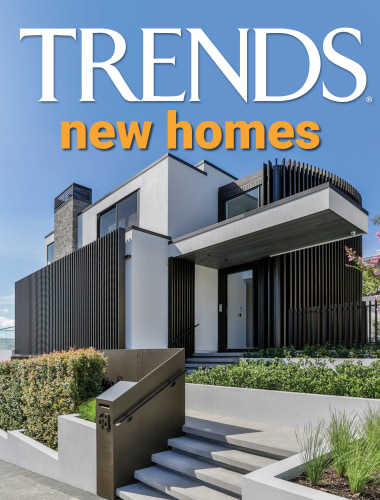
Emotion through engineering
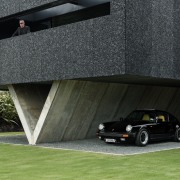
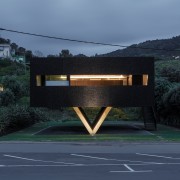
This dramatic Piha beach house is right on point – the seemingly impossible cantilever inspires wonder while the solid floating form itself references wartime coastal bunkers







Designed by Chris Tate Architecture
From the architectural designer:
Overview / origin story
When art and engineering collide, the result can be a building that both delights and unsettles all who encounter it.
In this case, the structure stands at a remarkable location, its design responding and reflecting the unique characteristics of the site.
The project brief called for an iconic residence where physics and sculpture could merge in unexpected ways.
This ambition is manifested in the design, where a narrow 300mm wide point becomes the central pivot for a structure that seems to defy gravity itself, creating a sense of weightlessness amid its surroundings.
The building draws inspiration from Piha's fierce natural landscape and the coastal fortifications that once dotted Auckland's coastline during World War II, lending the house its name – The Bunker.

The home's distinctive bunker slot also serves a crucial purpose – it shields the house from brutal natural elements as well as the bustling summer car park below, offering a sense of protection and privacy while external distractions remain unseen.
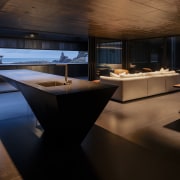
Inside, the slot frames the raw beauty of crashing surf, sand dunes, and sky.
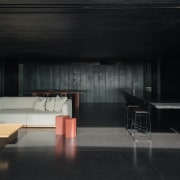
The materials used in the construction are deliberately dark and moody, evoking the history and the mystique that have long surrounded Piha.
The atmosphere of the house is as much about the materials' tactile qualities as it is about the story the site tells – an interplay of place, nature, and the engineering marvel that stands upon it.
The why
Perched above the raw coastal edge of Piha, this house was conceived as a response to both an extraordinary site and an ambitious brief.
The owner sought a weekend residence that would honour the rugged spirit of its surroundings while offering refuge and repose.
The site demanded a design that could stand against challenging conditions – relentless wind, salt spray and summer crowds – without compromising connection to the landscape.
The purpose of the project was to create a house that challenges the conventions of coastal architecture: not light and transparent, but grounded, weighty and unapologetically protective.

The idea
The conceptual foundation of the home lies at the intersection of physics and sculpture.
The design explores what happens when structural logic meets artistic expression – when mass appears to float.
A single 30cm structural point acts as the pivot for a dramatic cantilever, creating the illusion of defiance against gravity.
Referencing wartime coastal bunkers and Piha’s elemental history, the form is at once defensive and poetic.
The idea was to design a building that didn’t just sit on the land, but emerged from it—resonating with the mythology and materiality of the place.
The design
The house is deliberately sculptural in form and monolithic in expression.
The exterior’s textured black rainscreen – manufactured from recycled aluminium cans – was selected to echo the local volcanic rock.
A narrow slot cuts through the ocean-facing front of the house, shielding the interior from environmental exposure while simultaneously framing views of surf, dunes and sky.
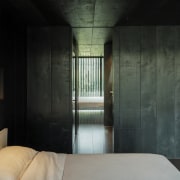
The palette is restrained and tactile: charred timber, matte ceramics and blackened steel – all materials chosen for their durability and atmospheric depth.
Together, they create a brooding presence, one that feels grounded in Piha’s intense natural character.

Passive principles ensure the house remains comfortable and energy efficient.
The foundations presented a unique engineering challenge, compounded by logistical limitations of what could be transported to site.
What looks like a V is actually an X, piled 18m through sand into bedrock.
The project took 14 years to complete, testament to an exacting level of detail throughout the design and construction process.
All services and functional elements have been hidden, to protect the building’s minimalist lines.

What elevates the work
What elevates the holiday home is its ability to evoke emotion through engineering.
The audacious cantilever not only pushes structural boundaries but also elicits a visceral response—uncertainty, wonder, intrigue.
The integration of design and context is seamless, with every material choice and spatial decision reflecting the harsh beauty of Piha.
Its dark, brooding presence subverts the typical coastal vernacular and proposes an alternative: that a beach house can be introspective, tough, even confrontational—and still offer moments of serenity.
Beyond its form and function, the project stands as a testament to how architecture can express narrative, myth and place in a deeply compelling way.

Perhaps most telling of its impact is the public response.
Despite being a private residence, the house has become an informal local landmark.
Visitors are drawn to its enigmatic presence; people even picnic beneath the cantilever, treating it as a sculptural pavilion.
In this way, the house has transcended its brief – it’s not just a holiday home, but a piece of architecture that invites curiosity and a new way of engaging with the landscape.
Credit list
Architectural designer
Kitchen designer
Interior designer
Cladding
Louvre system
Flooring
Wallcoverings
Feature light fittings
Glazed wall units
Dining table /chairs
Photography
Helpful links
Windows and Doors
Cabinetry Hardware
Spas
Home Builder
Roofing
Heating
Flooring
Taps
Home Design
Story by: Trendsideas

Home kitchen bathroom commercial design