Urban REJUVENATION
Facing the city's oldest buildings on one side and its newest on the other, this development is a vital new link in Newcastle's urban fabric


Understanding how people interact with a newbuilding is important for any architect but it becomes crucial when a development features health facilities, where issues of privacy, navigation and psychological security are paramount.
Before construction, around half of this five-storey, 10,496m² development in Newcastle, New South Wales, was pre-let to Hunter New England Health to house a community health centre and related health services. The remainder of the building, developed by Austcorp, was earmarked for retail units at ground level and A-grade commercial offices on the top two stories, overlooking the city and harbour.
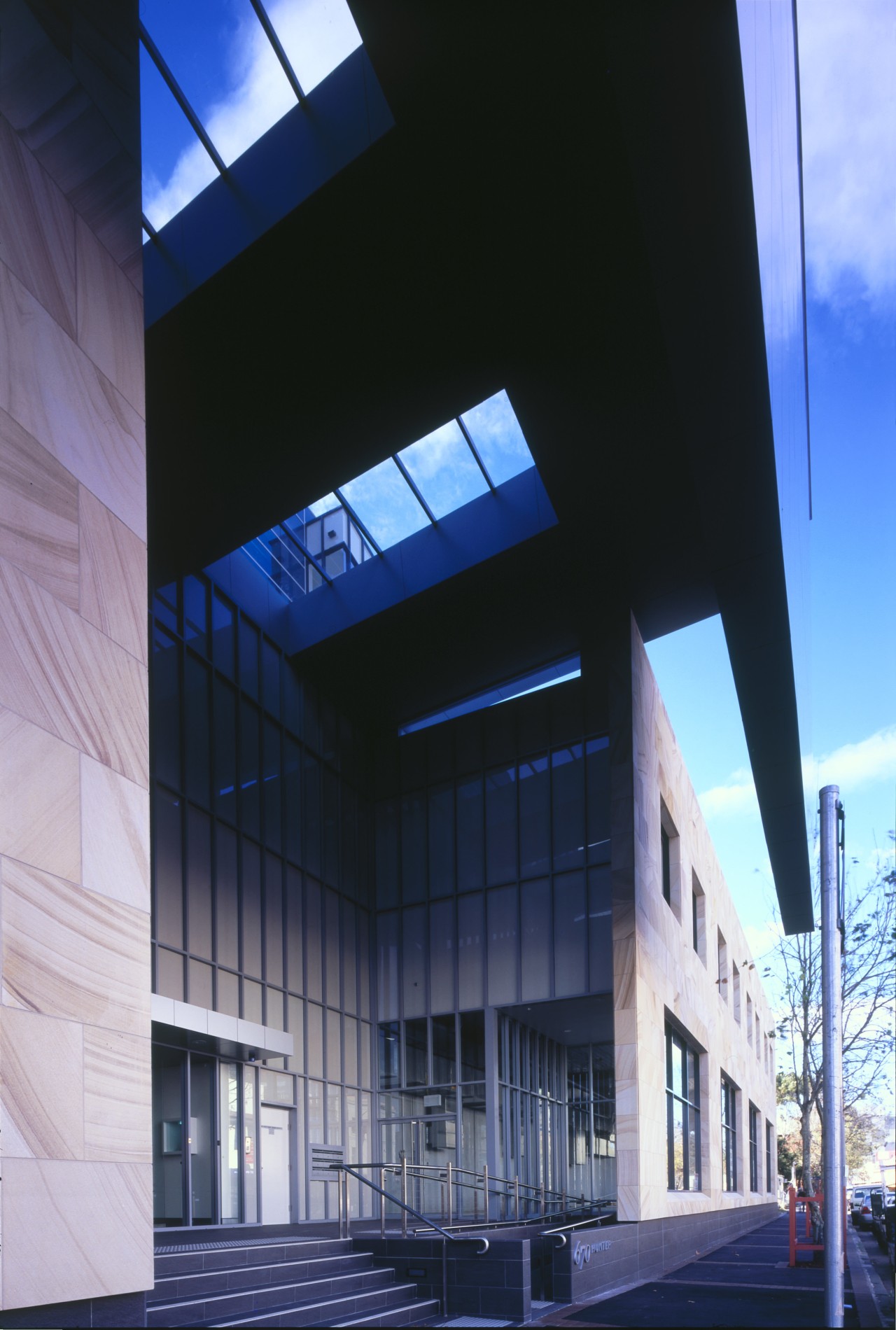
Patients' needs were considered by introducing easy navigation, a domestic colour palette, and a large skylight that provides a reassuring link with the outdoors, says architect Chris Acevski of Suters Architects.
"Every architect is different, but I placed myself in the situation of being in a strange environment where you can't relate to anything. If you can see the sky, you can see what's happening outside. It's something you can relate to minute by minute and hour by hour."
Other calming elements include a warm, earthy colour palette for the interior, akin to the colours found in a domestic setting. A curved metallic-red wall runs the length of the building, providing a continuous wayfinding device for people visiting the polyclinic. Visitors to the needle exchange clinic are directed to the service with discreet signage on an entrance that is visually integrated with the rest of the exterior.

"Another design challenge was creating community facilities that would be appropriate in two, five, even 10 years' time," says Acevski. "We factored in flexibility in a number of ways for example, working with an acoustic engineer to make sure that interior walls can be removed and repositioned, while still providing the levels of privacy needed for patient consultations."
As well as meeting its functional brief, the building also had to work with its site and location. On its north side, the site faces the glass and steel of an emerging commercial quarter; to its south, it faces nineteenth-century sandstone buildings.
Responding to these seemingly incompatible styles, the architect has incorporated a vertically massed glass elevation on one side and a sandstone facade on the other. The south-facing elevation also takes a more horizontal form, so that it does not dwarf the surrounding two storey buildings. Separate entrances allow commercial and health amenities to exist side by side, while maintaining their distinct identities, and an underground car park provides parking for 197 vehicles. Excavations here needed to be shallow, to avoid lengthy and costly marine engineering works.
Of all the project's strands, designing the office space for future tenants was the trickiest, says Acevski.
"We had to make assumptions about what future tenants might need, so we introduced large floor plates that can be configured flexibly and designed oversized windows to make best use of the natural light and views over the city and harbour," he says.
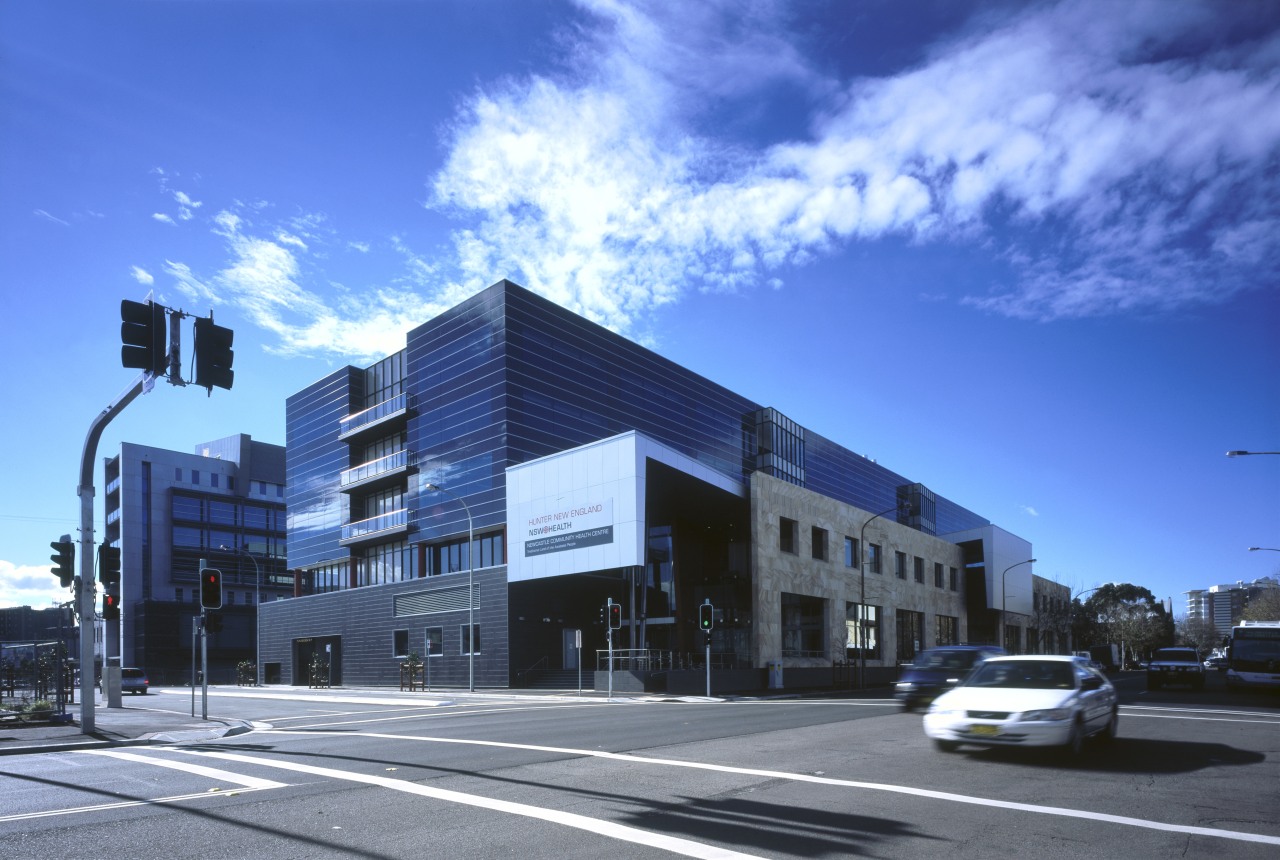
Other draw cards include a separate entrance for commercial tenants and an energy-efficient building, says Tim Gavan, Austcorp's general manager for New South Wales and Victoria.
"Our decision to develop a building that was only half committed at the start of the project was vindicated by the fact that the building was almost pre-let on completion," he says. "The building has achieved a 4.5 ABGR (Australian Building Greenhouse Rating) energy rating, which is a first for a commercial building in Newcastle."
The use of Solar-E glazing and an integrated facade insulation system prevents a large amount of heat transfer through the facade, which in turn reduces the need for air conditioning and mechanical ventilation. The large windows on the top stories distribute natural light to the entire floor plate, and reduce energy consumption from artificial light sources.
Credit list
Services Engineer
Alternative fire solutions
Geotechnical services
Archaeologist
Independent certifier
Lifts
Electrical services
Roller doors
Piling
Steelfixing
Toilet partitions
Joinery
Stainless steel balustrades
Concrete place
Sandstone
Glass facade
Doors and frames
Concrete supply
Plasterboard linings
Civil works
Mobile cranes
Stainless steel benches
Terracotta and aluminium composite cladding
Tiling
Formwork
Traffic control
Surveyor
Building certifiers
Medical gas services
Noise and vibration consultants
Mechanical services
Hydraulic services
Fire services
Louvres
Waterproofing
Final clean
Painting
Earthworks
Blocklayer
Fall arrest system
Pre-cast
Metal roofing
Waterproofing
Carpet and vinyl
Reinforcement supply
Aluminium balustrades
Structural steel
Window furnishings
Structural beams
Scaffold
Story by: Trendsideas

Home kitchen bathroom commercial design
Character dovetails contemporary
I'll follow the sun
Lock-and-leave jungle oasis
