Fine romance
This master bathroom, with its warm terra cotta floor tiles and beamed ceiling, is pure Italy




Creating a sense of history in a new home is a subtle art, since old buildings are most often built up layer by layer, with each generation adding their own personal touches.
For the designers of this master bathroom, arriving at a sense of time and place in this case, an eighteenth-century Italian farmhouse was only achieved after months of research, trips to Italy, and carefully choreographed design.
What fired the project was a clear vision from the owners and the design team about what was needed, says designer Julian Cohen. The house needed to reflect an Italian vernacular to satisfy the owners' affinity with traditional Italian design, and to complement their organic vineyard.
And in one of those rare moments of serendipity, a photograph in a book showing an Italian interior inspired the husband and wife design team, and the owners, with a clear direction for the project.
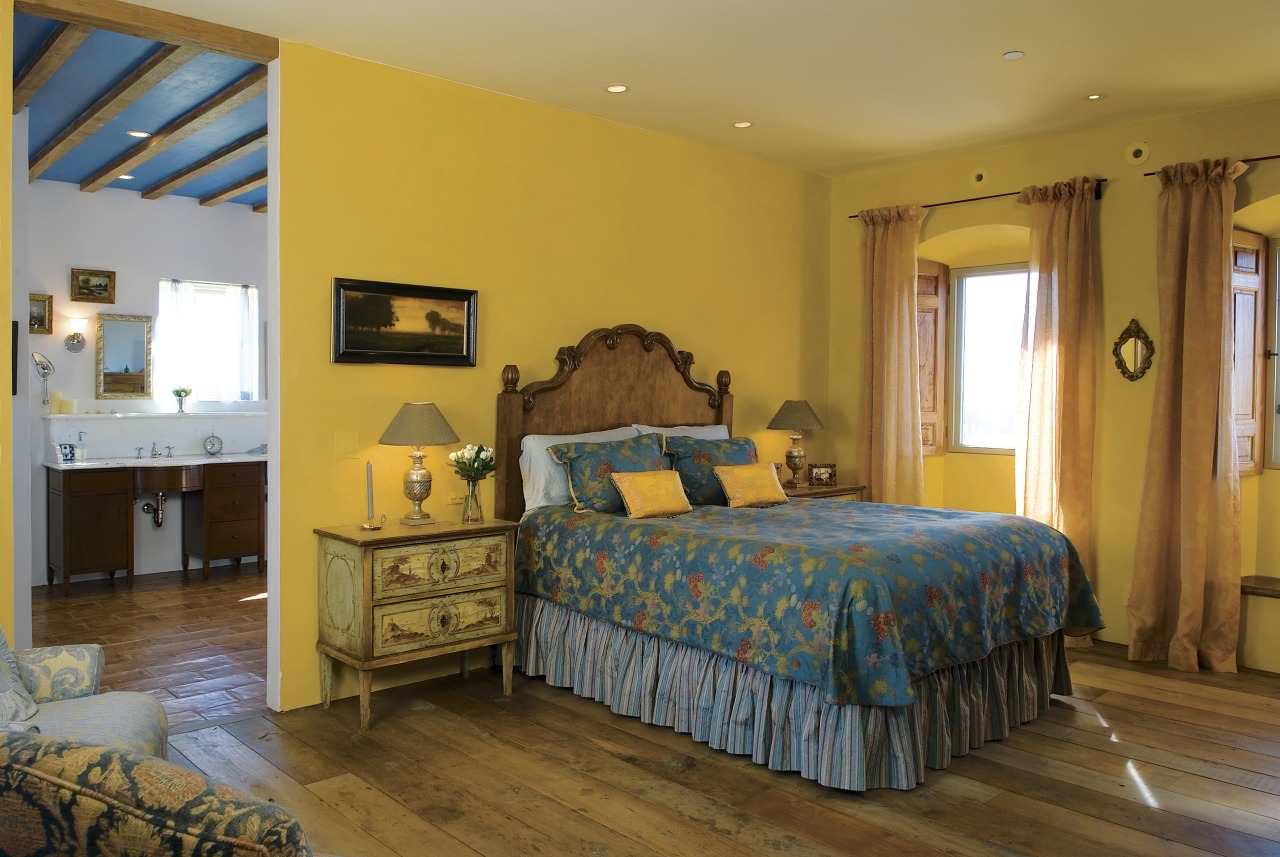
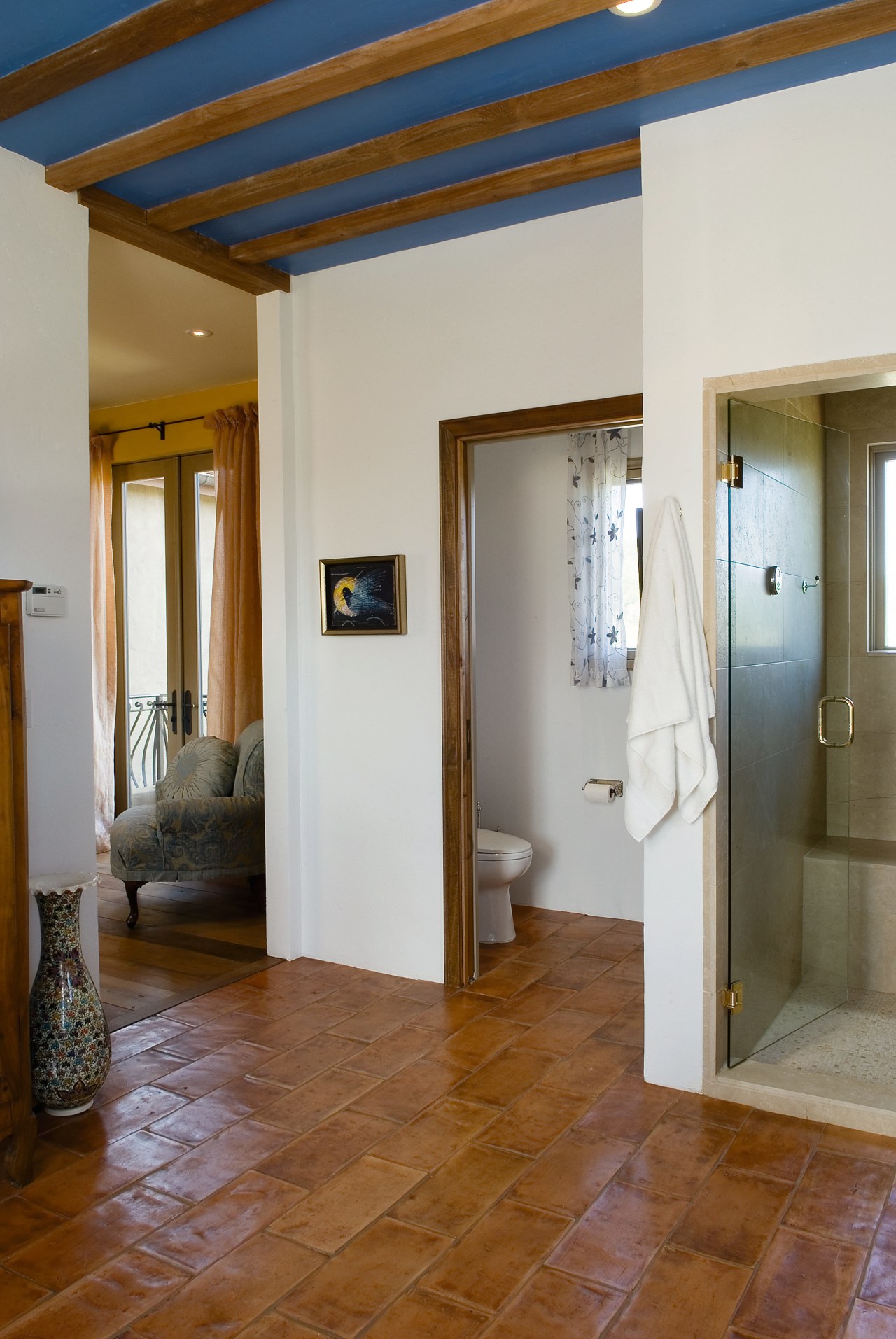
The result is a master bathroom with a rough-hewn, relaxed feel. Stand-alone furniture, a beamed roof, and large terra cotta floor tiles combine to create a traditional ambiance.
"Over and over again, you'll find terra cotta floors in Italy, so we decided to use the idea here," he says.
The tiles, which were custom made in Italy, have a traditional waxed finish and a rustic look that evokes a rural home. The beamed ceiling, with its sky-blue paintwork, is also based on Italian vernacular architecture. The beams were designed to look structural, and installed in some rooms, but not others.
"This was done to create a sense of living history," says Cohen. "It's as if the whole house has been continually worked on over the years."
For the same reason, the window openings in the house are either arched, tapered, or, like those in master bathroom, straight. Nothing is systematic or strictly themed, says Marie Cohen, the interior designer for the house.
"We've created a casual, asymmetric look, but there are little touches of elegance amid the rusticity, which is very European," says Cohen.
Building a new house allowed the designers to choose the best orientation for the rooms, and to introduce eco-friendly features many of them based on traditional architectural practices.
"People usually use the bathroom first thing in the morning, so we positioned the room so that the morning sun cascades through the sheer drapes," Cohen says.
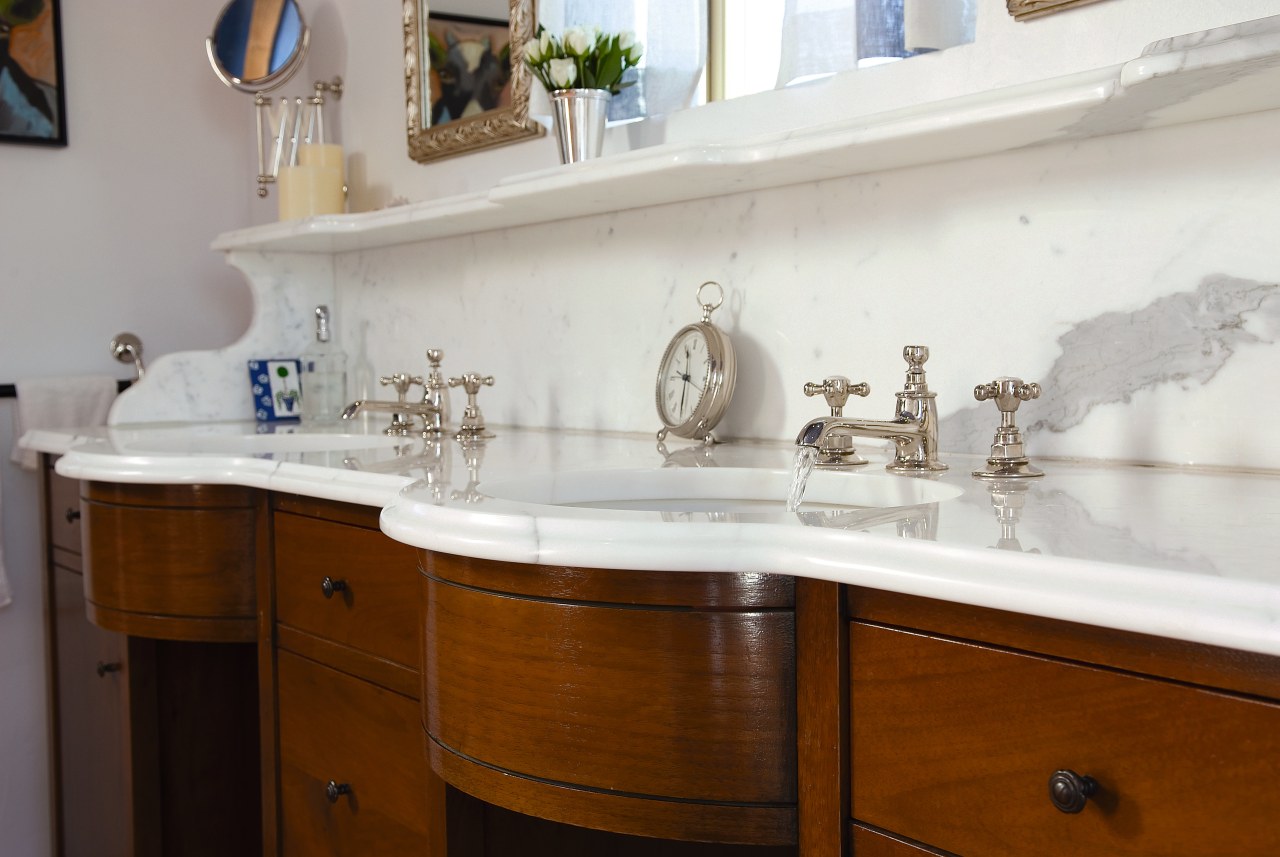
"The white walls, freestanding tub and marble tops create a light and fresh feel, while the terra cotta tiles and beamed ceiling bring warmth to the room and help to ground it."
The windows on the south side of the house, including the master bathroom and bedroom, have deep sills and shutters, typical of Mediterranean houses. During the day, the shutters can be closed to keep the rooms cool. The 18-inch-thick walls on this side of the house another traditional touch are insulated for passive cooling. Photovoltaic cells provide all the home's electricity, and passive solar energy contributes to the underfloor heating.
Credit list
Interior designer
Vanity
Cabinetry
Basin
Flooring
Tiles
Chair fabric
Drapery hardware
Main contractor
Vanity counter
Bathtub
Faucets and shower fittings
Wallcoverings
Chair
Drapes
Story by: Trendsideas

Home kitchen bathroom commercial design
Lock-and-leave jungle oasis
Large on lifestyle
Depth, personality and detail