Golden touch
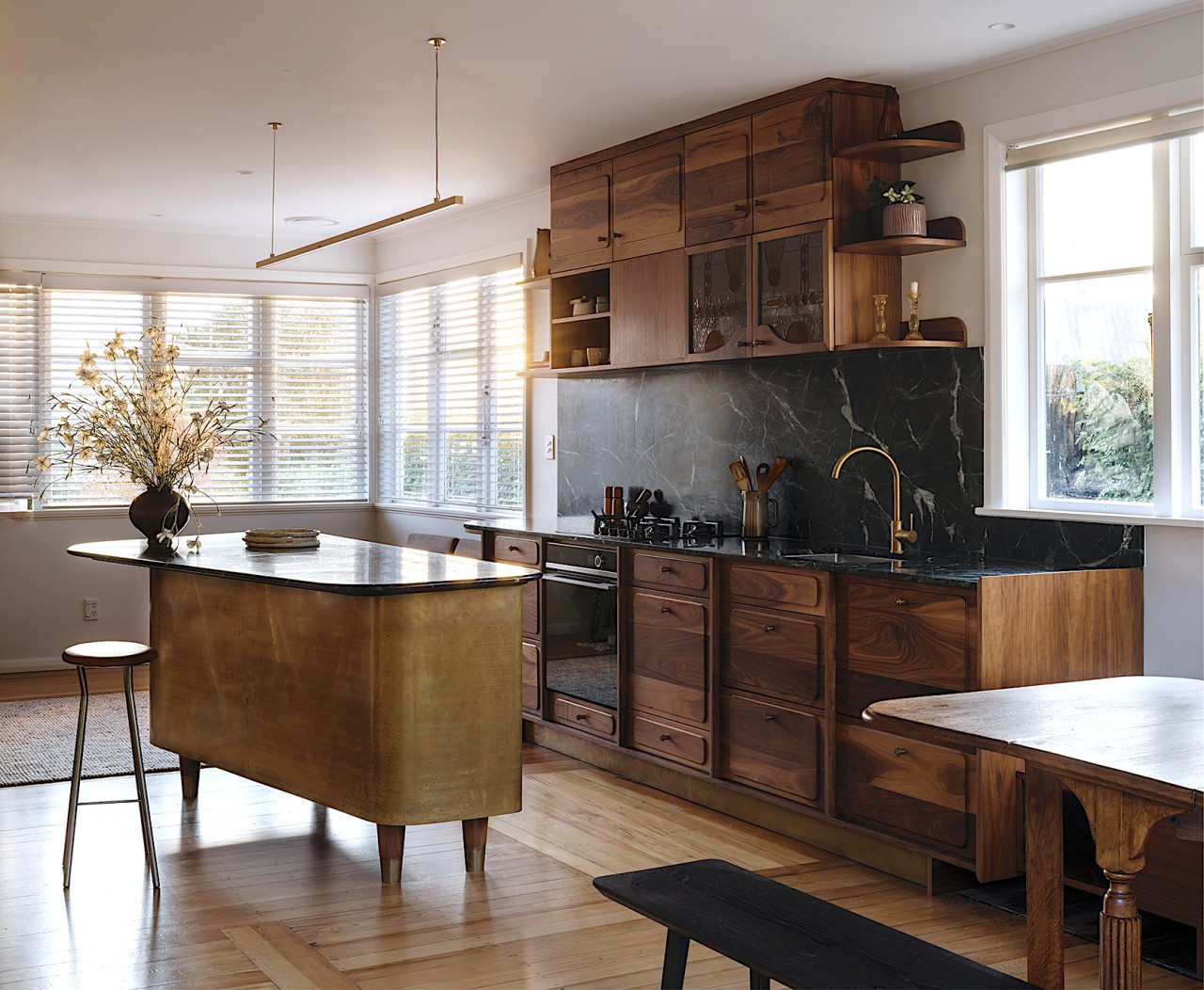
Two drivers help characterise this crafted walnut and aged-brass kitchen – one is celebrating the sunlight's penetration into the 1950s duplex while the other is celebrating the golden kōwhai flower in bespoke motif


Designed by Raimana Jones and Mathilde Polmard, Atelier Jones Design
From the architect:
The setting
This kitchen forms part of a renovation of a 1950s duplex in Waterview, Tāmaki Makaurau.
The design focusses on creating a sense of openness within the main living areas, with integrated storage and a central kitchen island forming the heart of the home.
The living spaces are flooded with warm afternoon light, shaping a material palette that responds to this glow.
The warmth of walnut and terracotta is balanced by the reflective patina of aged brass.
The kitchen
The owners approached us to remodel their kitchen, as the existing melamine cabinets were failing and the layout lacked benchtop space.
Their gas stove was non-compliant, positioned against a window, and storage had been poorly planned, with a laundry cupboard awkwardly framed by bulky walls between the kitchen and lounge.

In its place, they wanted a kitchen that would add warmth and modernise the home, while remaining sympathetic to the era and typology of their 1950s duplex.
The first thing that struck us on visiting the house was its abundance of natural light.
With a generously glazed north-west wall, the main spaces are filled with the warm glow of the afternoon sun, an element we sought to build on through planning and material choices.
We relocated all utility and bulk storage opposite the glazed areas and moved the main kitchen cabinetry into the former laundry space.
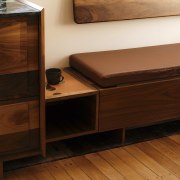
A built-in seating booth now frames the dining area, a cosy spot where you could read a book and bathe in the warmth of the afternoon sun for hours.
Solid bungalow-style doors in native timber hinted at an era that valued craft, a quality we carried into the new design.
The material palette was developed to create a sense of luxury while grounding it in craft and humility.

Drawing from the Art Deco period, brass became a prominent material used throughout the space.
Rather than allowing it to feel too opulent, the brass was aged in-house to achieve a mature, understated patina, as if it had always belonged to that home.
In addition, it felt appropriate to clad the tall storage unit with brass to reflect and bounce light and to soften its large presence.
Walnut and terracotta tiles provide a warm counterpoint, balancing the exuberant quality of the brass with a more tactile materiality.
A key precedent for the project was Charles Rennie Mackintosh’s famous Scottish 'Hill House' that employed a rose motif as a narrative device.
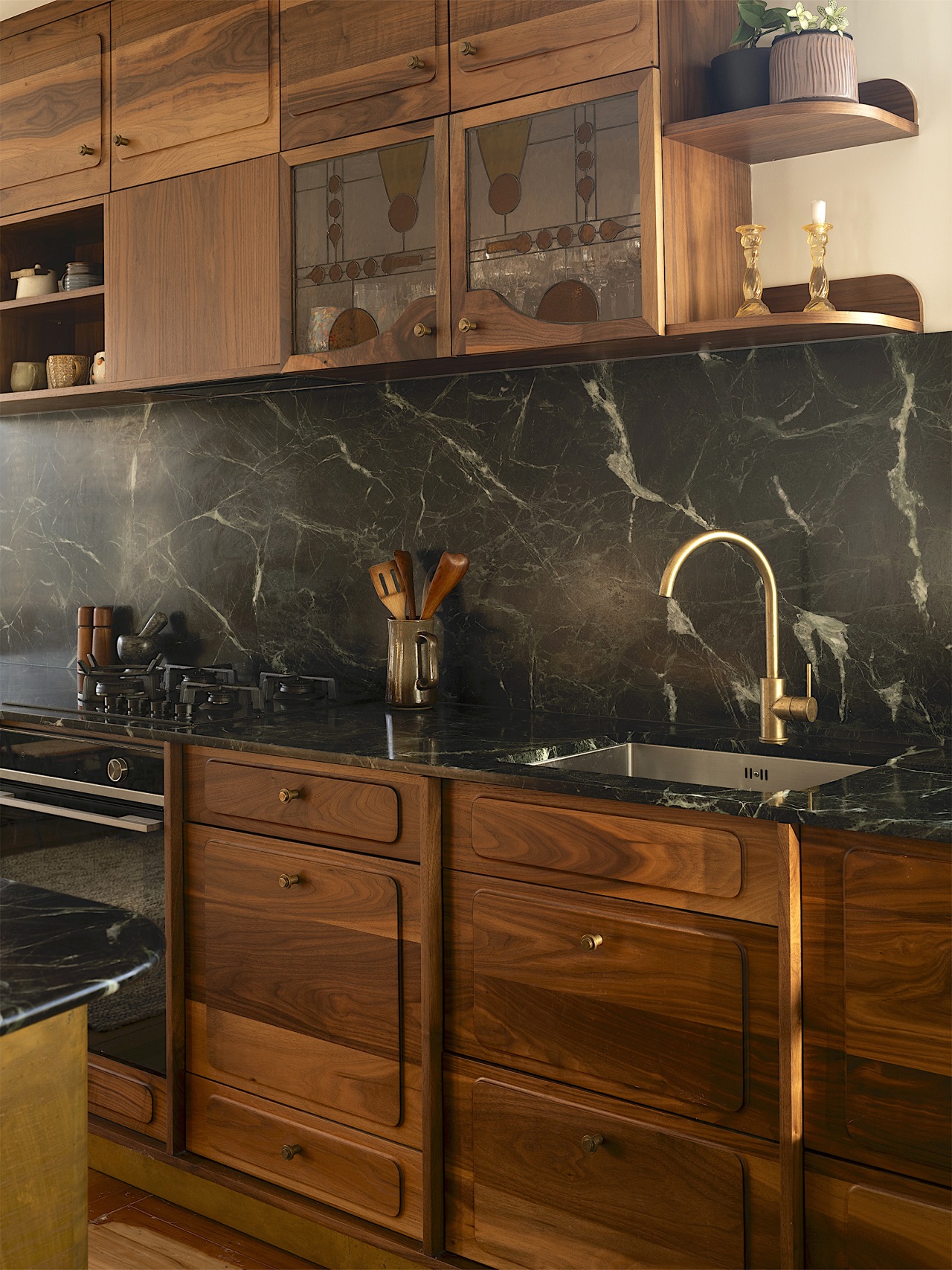
Building on this approach, a kōwhai motif, endemic to Aotearoa, was developed and translated across multiple mediums and scales to create a cohesive spatial identity.
It appears in stained glass panels of the cabinetry, tiling patterns, and a subtle brass inlay concealed in an internal drawer.
To achieve this involved close coordination with specialist trades, such as the glaziers and tiler.
Credit list
Lighting
Oven, cooktop, ventilation, refrigeration, dishwasher
Awards
Cabinetry
Benchtops/splashback
Stained glass
Photographer
Helpful links
Expert Property Advice
Windows and Doors
Cabinetry Hardware
Spas
Roofing
Flooring
Home Design
Story by: Trendsideas

Home kitchen bathroom commercial design