The next step
Designing more than buildings, Ignite Architects was also responsible for designing the public spaces that surround Central One
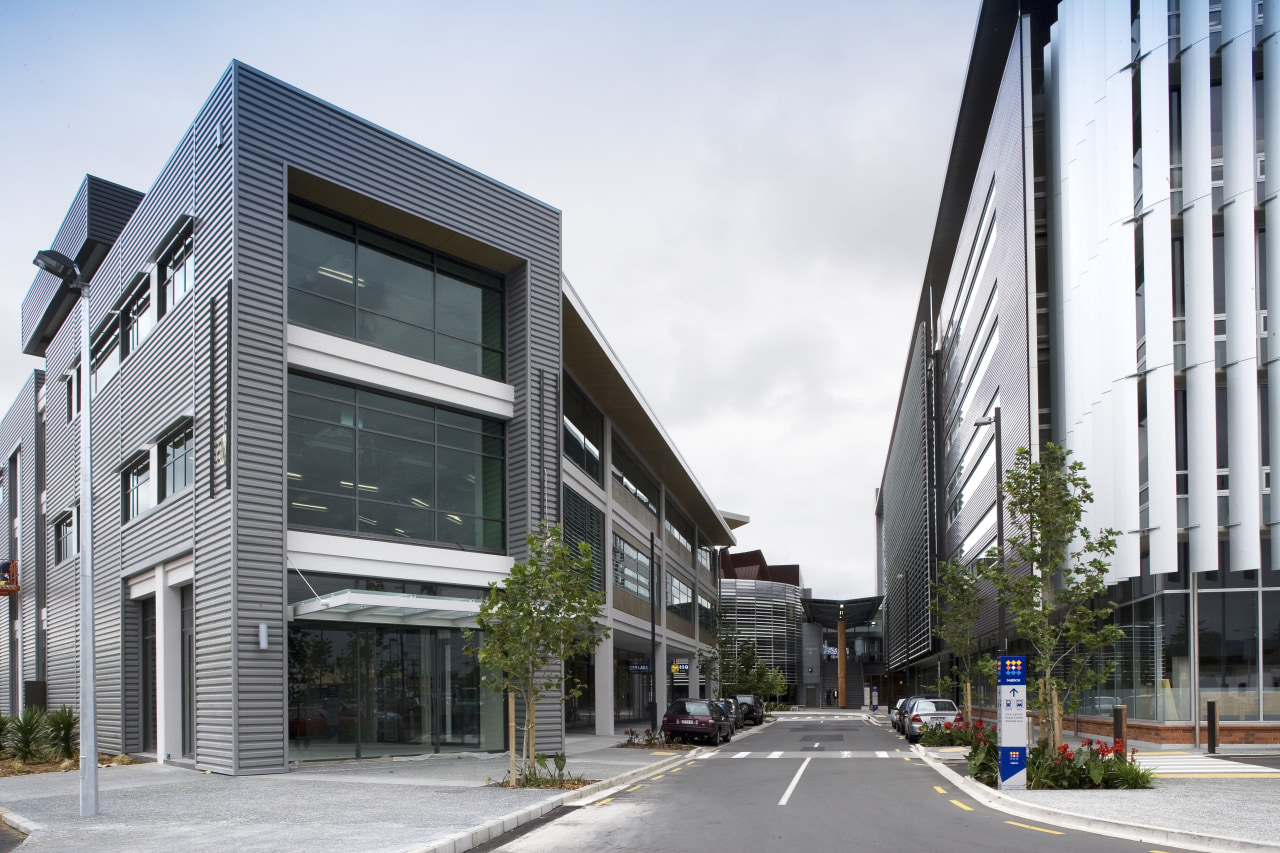
It's a given that designing public spaces requires careful consideration, especially when, as is the case with Waitakere Central, the space is required to fulfil more than a single role.
In this instance, the role of designing both public space and Central One went to Ignite Architects, who worked towards a fundamental objective of providing Henderson with a new urban centre, says Jeremy Craig, the firm's associate director.
"Our masterplan, which encompasses everything north of the civic centre, provides a density of buildings that will strongly define the new squares, streets and spaces, while creating and reinforcing street axes and connections to the adjoining environment," he says.
"One key to the project's success was generating urban density, or critical mass, so the centre can be to a large extent self sufficient. Central One is the first step in prompting activity that is necessary to achieve this. Essentially it's about people and pedestrians. With its floor-level retail, Central One forms an active border to the civic square, guaranteeing a lively space."
For vibrancy, Craig says it was important to border the square with activity. The architect suggests that Civic squares such as Auckland City's Aotea Square, suffer from ill-defined boundaries and redundant areas.

At the centre of the civic square, a new Japanese Garden features stones and plants based on those in the original garden gifted to Waitakere City by its sister city, Kakogawa. With an entrance square, water features and pavilion, it combines New Zealand natives with exotics and Japanese plants, including cherry trees.
"The Japanese garden is a transitional zone," says Craig. "It changes from a formal space at the street to an informal, organic space adjacent to the railway."
For the design of Central One, Ignite incorporated a number of passive design features. Roof overhangs and louvres provide solar shading, and a light colour palette reflects sunlight, helping to reduce the reliance on air conditioning. Rainwater is also harvested for toilet use and stormwater runoff is controlled. Use of sustainable and recycled materials was also a priority, and, in many cases, interior finishes feature exposed raw materials.
"The building itself is relatively simple it has a concrete frame with typical streetscape scale, and infills to break it down and add texture. Internally, care was taken to maximise space. Ceilings were omitted so it feels generous inside, and there is a maximum distance of 6-7m to the nearest windows to optimise working conditions."
To avoid sick building syndrome', which is caused by extensive use of volatile synthetic materials in a relatively airtight space, low-vapour, natural materials were selected.
"The image most people have of Waitakere is of a house in the bush, rather than a slick glass tower, which is why we chose concrete, timber, plywood and other natural materials. It's an A-Grade commercial building, yet it feels like more than that."
"Working for Waitakere Properties, it was crucial that everything promoted the sustainable ethos. However, it was also important to do so in a way that adds little to the overall costs. Utilising these passive features achieved an above 4 green star sustainability rating, without adding considerably to the budget."
For more details, contact Ignite Architects, PO Box 37-853, Parnell, Auckland 1001, phone (09) 356 4791. Website: www.ignitearchitects.com.
Story by: Trendsideas

Home kitchen bathroom commercial design